The Ultimate Guide To Scottish Silver
Scottish silver is one of our passions and we have made this guide so that you can read the marks on your piece of Scottish silver. Scotland had its own (slightly peculiar) system of marking silver, so if the marks on your Scottish silver are baffling you then hopefully you can use this guide to help you get started.
What Is Your Silver Worth?
How To Sell: Auction or Private Sale?
Mark Littler Ltd. are one of the only independent advisers in the antique industry. We offer trusted, independent advice to help you sell your silver for the highest possible price.
Selling at an auction might provide your silver with greater exposure. However, with a combined average of 45% in gross buyers’ and sellers’ fees, this approach might prove to be a false economy.
Conversely, finding a private buyer for your silver through our services could net you 33% more than if you sold it via auction, as our fees are only 12%.
What We Do For You
Simply fill in your contact details below and you will get an automatic referral to a leading silver auction expert who will give you an auction estimate and advise on how to sell with them. We will also see if we are able to get any offer from our private clients.
If we get any offers we will send these within 7 days. All offers are without obligation and there are no fees to pay us if you decide to sell at auction.
Silver Valuation Tips
To get the most accurate valuation of your silver simply ensure you provide the following information:
- What condition is your silver in? Let us know if there are and dents or heavy scratches in the silver.
- How heavy is your item? Please provide a measurement in grams if you can as this helps us determine the gauge of the silver. For instance a silver teapot can weigh as much as 1,000g or as little as 250g. Outwardly the design may look identical but the gauge of the silver is much heavier. This is important as items made from a better gauge of silver were often made by better makers for the upper classes, and as such will have a big impact on the value.
- PROVENANCE! Who owned your item before you did? Is there an interesting presentation inscription on your item that might shine light into it’s former life?
Important Note: this is a valuation service and not a hallmark identification service. Please see this page to learn how to read your hallmarks.
Free Expert Silver Valuations
Use the form below or send images of your silver to be connected with a silver expert.
Get In Touch With A Silver Specialist
"*" indicates required fields
What is Scottish Silver?
The assay office marks of Edinburgh and Glasgow
The two main assay offices in Scotland were based in Edinburgh and Glasgow. The marks that were placed on silver assayed here followed the same rules as the English assay offices except for one notable difference; instead of a Lion Passant to indicate the 925 standard they used a Thistle in Edinburgh and a Lion Rampant in Glasgow.
If your piece was assayed in either Edinburgh or Glasgow you can use this guide to read you marks. If it was assayed elsewhere then we have a guide on how to read other silver hallmarks here.
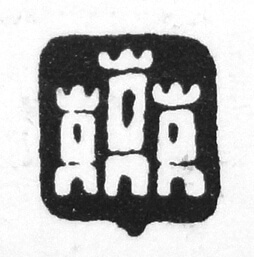
Edinburgh Silver Mark
The Edinburgh assay office has been marking silver since 1681. Ever since its formation the mark for Edinburgh is a three-turreted castle (pictured above). In 1759 the thistle mark was added to signify the 925 standard of the silver.
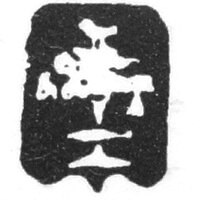
Glasgow Town Mark
The Glasgow assay office has been marking silver since 1681 but closed in 1964. The mark for Glasgow is a tree with a fish and a bell hanging from it (pictured above). It closed temporarily in 1784 but opened again in 1819.
A Guide to Reading Scottish Silver Hallmarks
As Scotland is a large country with a historically impractical transport system, it was often unfeasible for Scottish silversmiths to travel all the way to Edinburgh or Glasgow to have their silver marked.
As a result Scottish silversmiths began marking the silver themselves – often only striking the item with the maker’s mark and the town mark from where they were operating. Many Scottish silversmiths travelled from town to town looking for work so you may find the same mark at different towns.
The details of the Scottish provincial marks provided below have come from an excellent book by Richard Turner titled A Directory of Scottish Provincial Silversmiths & Their Marks. The ISBN number is 1850722935.
I strongly urge you to buy a copy while you can as it is becoming very hard to find. Here are a few links to the common retailers but they may not have any in stock when you look.
What Our Customers Say