The Ultimate Guide To Chinese Export Silver
Pieces of Chinese Export Silver are highly collectable. If you have a piece of Chinese Export Silver and would like to find out more about your item then read our guide to the history of Chinese Export Silver at the end of this page. You will also find a guide for the 6 things to look for on your Chinese Export silver including a guide to marks used.
Antique silver is a popular collectible because of its beauty and the intricate craftsmanship that often goes into creating each piece. However, with changing trends in interior design and collecting, it can be challenging to find buyers for your collection. That’s where our specialist valuers come in – they have the knowledge and expertise to accurately assess the value of your antique silver and find potential buyers who will appreciate its unique qualities.
What Is Your Silver Worth?
How To Sell: Auction or Private Sale?
Mark Littler Ltd. are one of the only independent advisers in the antique industry. We offer trusted, independent advice to help you sell your silver for the highest possible price.
Selling at an auction might provide your silver with greater exposure. However, with a combined average of 45% in gross buyers’ and sellers’ fees, this approach might prove to be a false economy.
Conversely, finding a private buyer for your silver through our services could net you 33% more than if you sold it via auction, as our fees are only 12%.
What We Do For You
Simply fill in your contact details below and you will get an automatic referral to a leading silver auction expert who will give you an auction estimate and advise on how to sell with them. We will also see if we are able to get any offer from our private clients.
If we get any offers we will send these within 7 days. All offers are without obligation and there are no fees to pay us if you decide to sell at auction.
Silver Valuation Tips
To get the most accurate valuation of your silver simply ensure you provide the following information:
- What condition is your silver in? Let us know if there are and dents or heavy scratches in the silver.
- How heavy is your item? Please provide a measurement in grams if you can as this helps us determine the gauge of the silver. For instance a silver teapot can weigh as much as 1,000g or as little as 250g. Outwardly the design may look identical but the gauge of the silver is much heavier. This is important as items made from a better gauge of silver were often made by better makers for the upper classes, and as such will have a big impact on the value.
- PROVENANCE! Who owned your item before you did? Is there an interesting presentation inscription on your item that might shine light into it’s former life?
Important Note: this is a valuation service and not a hallmark identification service. Please see this page to learn how to read your hallmarks.
Free Expert Silver Valuations
Use the form below or send images of your silver to be connected with a silver expert.
Get In Touch With A Silver Specialist
"*" indicates required fields
What is Chinese export silver?
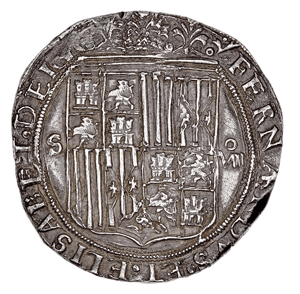
Chinese export silver was produced from the late 18th century to the early 20th century and traded from Canton. Early Chinese Export Silver was made in the European style, but through the 19th century a unique elaborate style developed, featuring dragons and landscapes made to appeal to tourists. Chinese Export Silver was made from melted Spanish trade dollars (the only currency allowed by Chinese merchants from foreign traders) so often tests as 90% silver.
What to look for in your Chinese Export Silverware
Decoration style
The main era for Chinese export silver was circa 1800-1900. The earliest pieces produced were made by Chinese silversmiths in the European style. These pieces will be plain, maybe with engraved decoration, with the Chinese maker’s mark often being the only clue to its original origin.
Later in the century the style of Chinese export silver became much decorative, with every surface except the base embellished! These later, highly decorated items are the most sought after in the current market.
The most common decorative themes include dragons, landscapes with or without people, and filigree work.
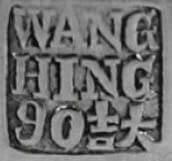
Chinese Export Marks
Your piece of silver is likely to be marked on the base with either: a Chinese character mark, English letters or pseudo hallmarks. Not all pieces are marked because the silver used was from previously alloyed Spanish dollars, there were no assay offices or other convention marks as there is with British silver.
Many of the maker’s names such as Wing Nam, Wang Hing, Powying etc, are made up Western sounding names rather than the actual name of the silversmith. The best reference work for Chinese Export Marks is by H A Corsby Forbes and is available for around £200 on AbeBooks
We can identify the maker of your item if you are able to send over clear images of the marks.
Age
Chinese Export silver is made from Spanish 8 Reales coin, also known as a trade dollar (or pieces of eight). Unlike antique English silver, with Chinese Export Silver older is not necessarily better.
The zenith of decoration on Chinese export silver was during the mid to late 19th century. Items from this period are often the most sought after as the silversmiths were reaching technical achievements seldom seen in English silver of the time. By contrast Chinese export silver from earlier in the century was a relatively plain copy of European styles and is much less commercial.
What Our Customers Say

































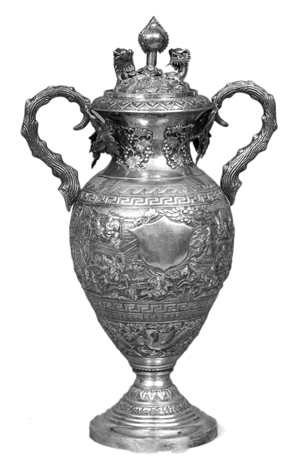
Forms
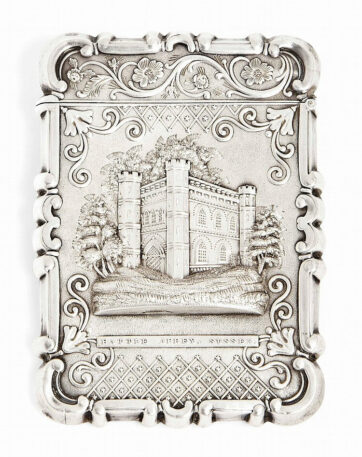
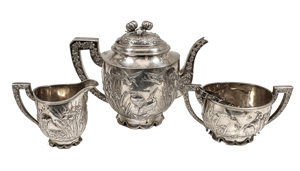
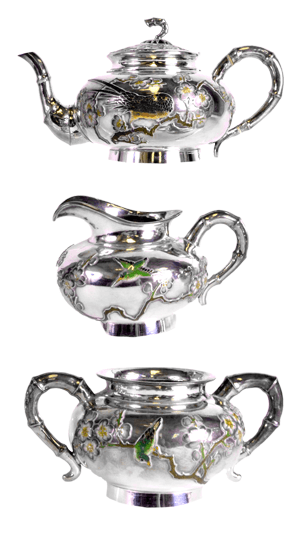
Chinese export silver comes in almost every form imaginable. The most common forms are mugs, tea services and card cases.
- Mugs are often decorated with a continuous landscape and are often around 10-20cm high.
- Tea services may number from three to six items, those which are decorated with dragons being the most commercial.
- Card cases were made in very large numbers and are often covered with continuous landscapes.
The most commercial items however are the larger more decorative items such as vases (very desirable), epergnes, bowls and cup and saucers (very rare).
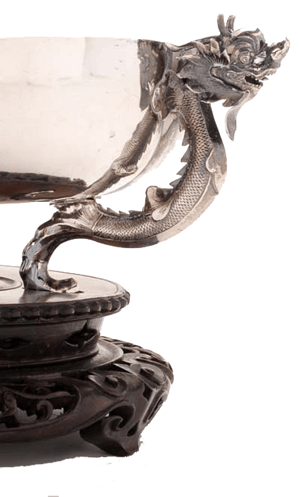
Dragons
Dragons are extremely important animals in Chinese culture and represented the emperor.
As the main buyers for Chinese export silver are now based in mainland China, it is their tastes that dictate value. The dragon is by far the most commercial decorative element and if your piece of silver is decorated with a dragon, or dragons, it is worth more than had it been decorated with a landscape.
Tea services decorated with dragons in high relief (rather than being engraved) are very sought-after and command a premium.
Provenance
Owing to the British rule of Hong Kong from 1841-1997 large quantities of Chinese Export Silver was exported back to the UK from diplomats and dignitaries.
Chinese Export Silver was often used as testimonial plate: silver given in recognition of services, time spent with a company or as an award.
Some items are engraved with inscriptions relating to who the item was presented to, what their position was and quite often the date of the presentation. Unlike with English silver, presentation inscriptions do not affect value.
A History of Chinese Export Silver
Chinese export silver, originally bought by merchants trading with China via the port of Canton, is a rapidly expanding market with some items selling in excess of £50,000. Although the Chinese had been making and exporting items made from silver from the early 18th century, it was not until 1965 that the first academic article was published on the subject (“China Trade in Silver,” John Devereux, Connoisseur, Nov 1965 p198).
Twenty years ago it was not common for Chinese buyers to purchase export wares, these were after all items for European consumption and were often classed as secondary wares. Fuelled by the increased number of fakes and the limited supply of Imperial wares, collectors are now seriously contesting export wares, of which Chinese export silver is one of the most sought after.
According to our research, the highest price paid for an item of export silver was a silver gilt teapot sold by Sotheby’s in 2008. This hexagonal teapot was made during the reign of the emperor Kangxi in the early 18th century. It sold for an astronomical £75,500 including commission.
This is the exception to the rule, but many items of Chinese export silver often sells between £1,000 and £5,000. It is often forgotten that Chinese export silver was much cheaper than silver made in Europe, so it was brought back in huge numbers to the UK, American and Europe.
As with any market it is best to ‘buy low, sell high’. The market for Chinese export silver has never been stronger. Nor has the Chinese economy ever looked more fragile. As such we would advise anyone with Chinese export silver to consign it for sale now.
We can advise the value of your Chinese export silver and help you find the best place to sell it, taking care of all the administration and logistics too. So if you have an item of Chinese export silver and you would like a valuation please contact us for more information.