A Beginner’s Guide To Selling Silver Trophies
Are you looking to find out what your silver trophy is worth, and how best to sell it? At Mark Littler Ltd we can help you understand what affects the value of your silver trophy, provide you with a valuation, and advise on how best to sell it.
Silver trophies have been made since the 17th century, stemming from the more utilitarian caudle cup. Silver trophies were originally designed for the upper classes of society and whilst they are not often used for their original purpose, silver trophies are collected for their historical and decorative appeal. They are often seen as a symbol of achievement and success, making them highly desirable to collectors.
When determining the value of a silver trophy, there are several factors to consider. The first is the age and history of the piece. Older trophies from renowned makers can fetch higher prices due to their rarity and historical significance. Additionally, the design and craftsmanship of the trophy can also affect its value. Intricate details and fine engravings can increase its worth.
What Is Your Silver Worth?
How To Sell: Auction or Private Sale?
Mark Littler Ltd. are one of the only independent advisers in the antique industry. We offer trusted, independent advice to help you sell your silver for the highest possible price.
Selling at an auction might provide your silver with greater exposure. However, with a combined average of 45% in gross buyers’ and sellers’ fees, this approach might prove to be a false economy.
Conversely, finding a private buyer for your silver through our services could net you 33% more than if you sold it via auction, as our fees are only 12%.
What We Do For You
Simply fill in your contact details below and you will get an automatic referral to a leading silver auction expert who will give you an auction estimate and advise on how to sell with them. We will also see if we are able to get any offer from our private clients.
If we get any offers we will send these within 7 days. All offers are without obligation and there are no fees to pay us if you decide to sell at auction.
Silver Valuation Tips
To get the most accurate valuation of your silver simply ensure you provide the following information:
- What condition is your silver in? Let us know if there are and dents or heavy scratches in the silver.
- How heavy is your item? Please provide a measurement in grams if you can as this helps us determine the gauge of the silver. For instance a silver teapot can weigh as much as 1,000g or as little as 250g. Outwardly the design may look identical but the gauge of the silver is much heavier. This is important as items made from a better gauge of silver were often made by better makers for the upper classes, and as such will have a big impact on the value.
- PROVENANCE! Who owned your item before you did? Is there an interesting presentation inscription on your item that might shine light into it’s former life?
Important Note: this is a valuation service and not a hallmark identification service. Please see this page to learn how to read your hallmarks.
Free Expert Silver Valuations
Use the form below or send images of your silver to be connected with a silver expert.
Get In Touch With A Silver Specialist
"*" indicates required fields
What Affects The Value Of Your Silver Trophy?
Provenance
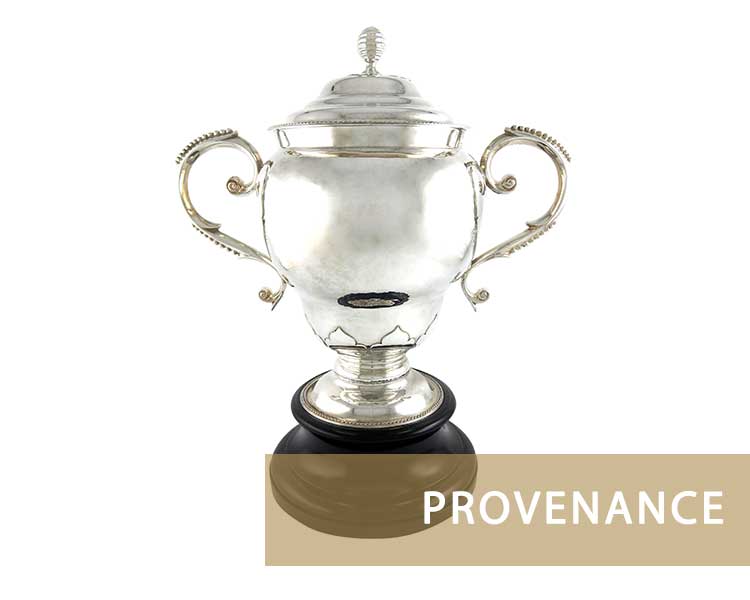
As silver trophies were received at large and prestigious evsents, they often have strong provenance.
Provenance is the history and origin of the item. Sometimes trophies will have an inscription of the event or occasion to identify its history.
A clear provenance can greatly impact the value of your silver trophy as it legitimises its history and adds an often incredibly interesting story to the piece.
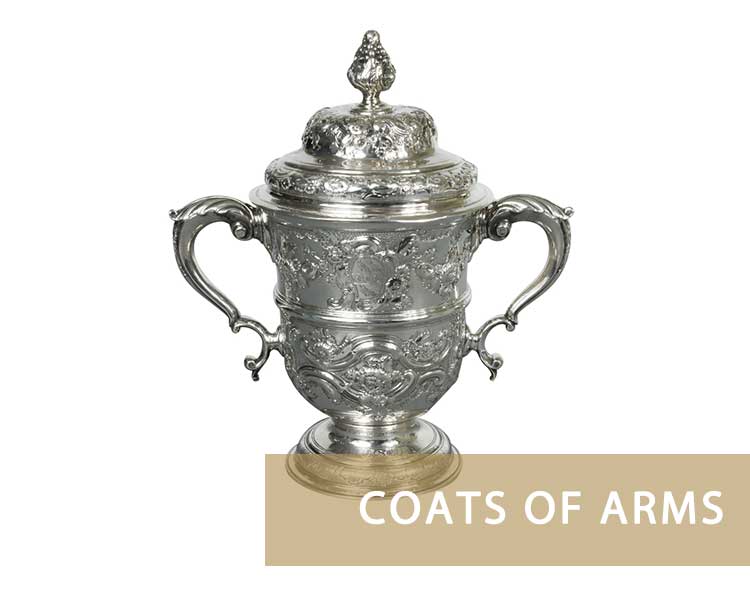
Coat of Arms
Given that trophies were given at events most commonly frequented by the upper tiers of society, it was common to have your coat of arms or crest engraved on your silver trophy.
If the engraving of the coat of arms is period with the item then this will often enhance the value. Coats of arms belonging to prominent families, or even royalty, will enhance the value of your silver trophy greatly.
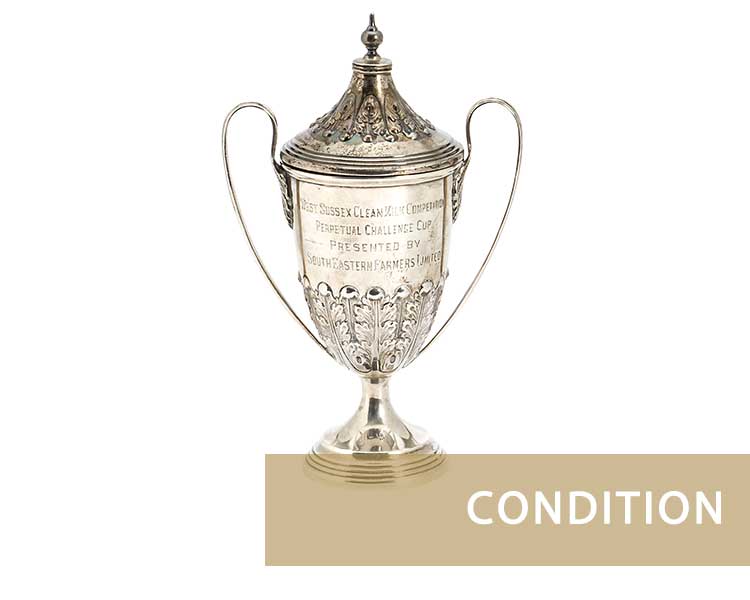
Condition
Clearly the condition of your trophy will have an impact on the value.
Dents, bruises and splits are all obvious forms of damage that will impact the value.
Quite often on trophies you may find that a coat of arms has been removed which can be hard to spot but will also have a big impact on the value.
Do not worry about cleaning your trophy. In some cases you can reduce the value of a trophy by cleaning it.
What Our Customers Say

































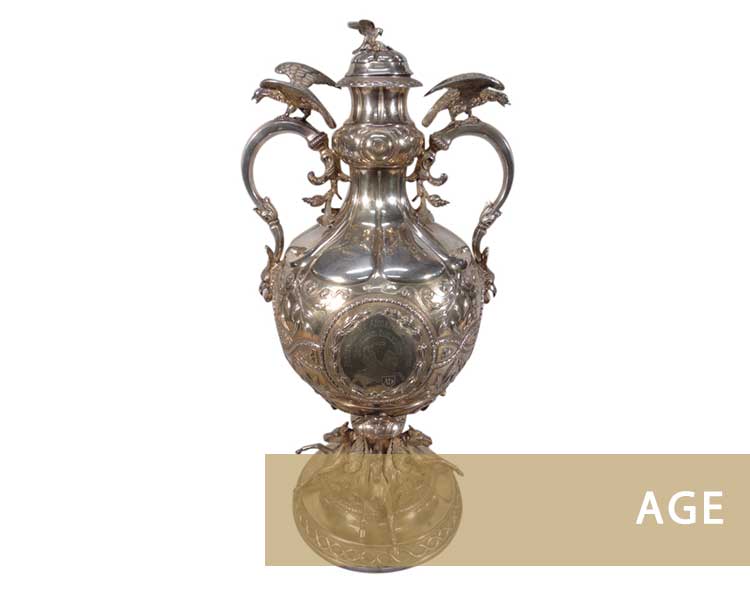
Age
We have been applying hallmarks to silver since the 14th century and as such they are the oldest form of consumer protection in the world.
Silver trophies have been made from around the 17th Century and the earlier pieces often command a higher price.
However, the older the trophy, the more likely that there will have been repairs over the years. As such it is a combination of both the age and the condition that will have a real impact on the value of your trophy.
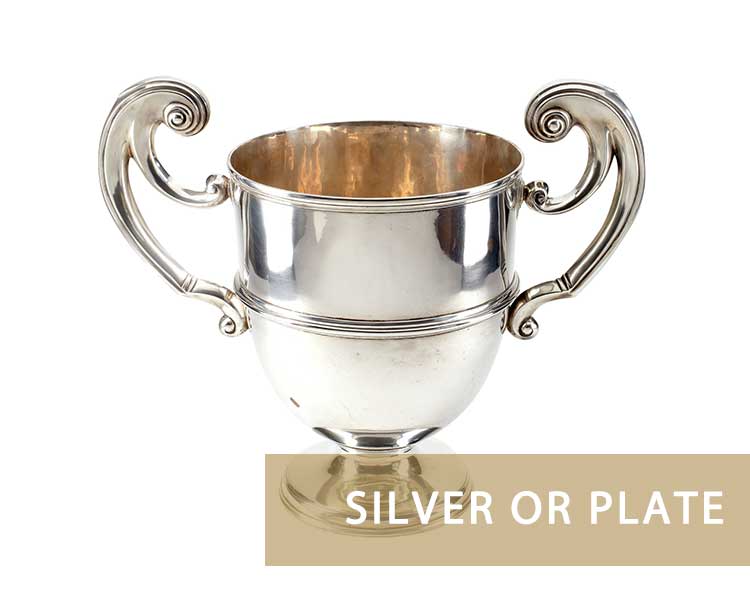
Silver or Plate
To put it bluntly, sterling silver items were made for the middle and upper classes. Silver plate was an invention aimed at making ‘silver’ style items available to the masses.
If you see the letters EPNS or A1 on your trophy then it is silver plated. Your trophy will need to be hallmarked and carry very specific marks in order to be legally called silver.
As silver plate was made for the mass market many items of silver plate do not have any value.
Weight
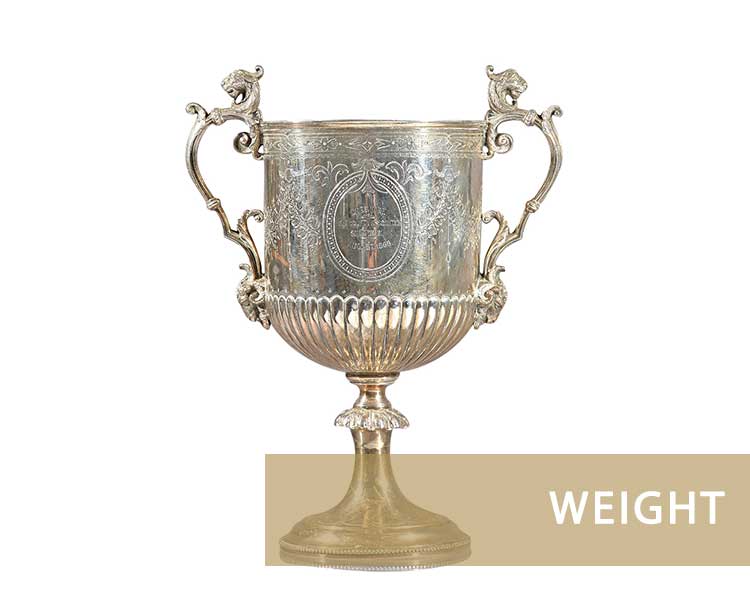
The weight of your trophy will help us to understand the quality of your silver. But how?
Silversmiths like Paul Storr produced many items to the same design, but depending on the wealth of their client they would adjust the amount of silver that they would use for the commission.
As such a trophy may be 500g or it might be 1,300g. Without being able to handle your items in person, providing the weight will give us a very good idea of the gauge of the silver used and thus we will be able to give you a very good idea of the value.