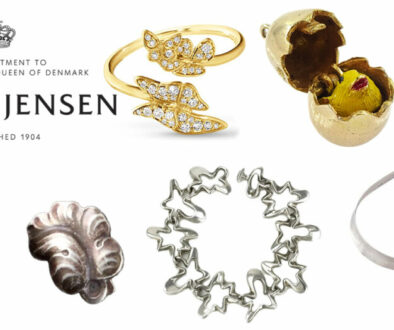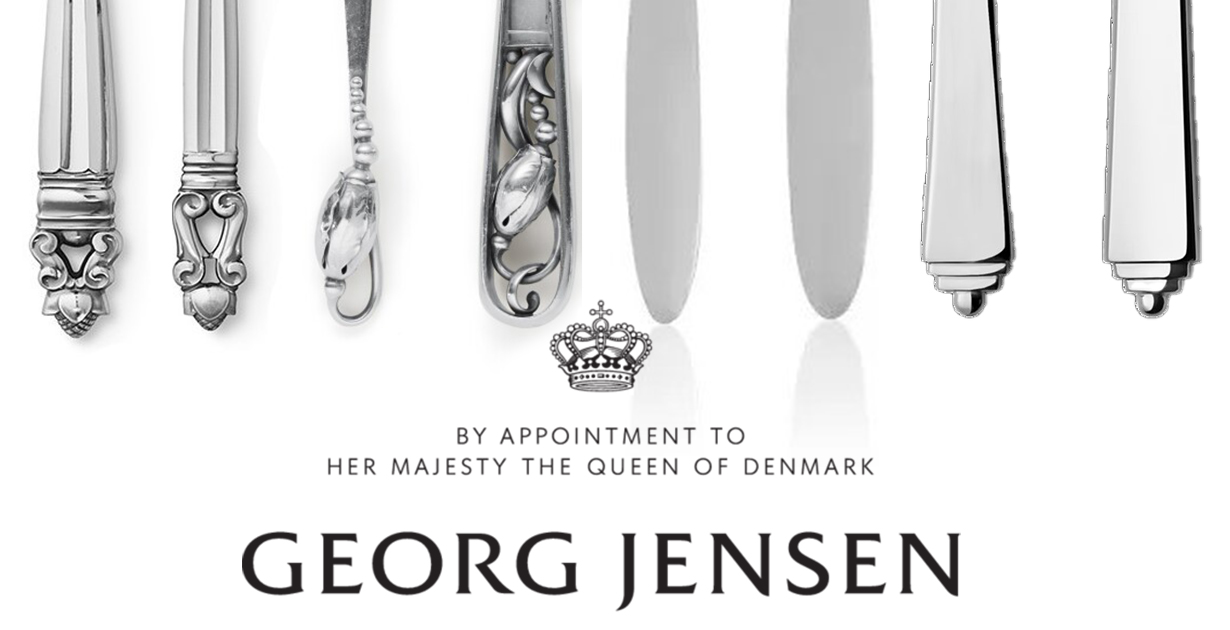
Georg Jensen silver is amongst some of the most sought-after silverware on the secondary market. From his beginnings during the Art Nouveau period through to his death in 1935, Georg Jensen produced some stunning and timeless silverware that continues to be popular today.
With many of Jensen’s designs instantly recognisable, it is no wonder that the secondary market is abuzz with demand for these historic pieces.
With that in mind, let’s take a look at some of the most popular and sought-after Georg Jensen silver designs. Particularly, flatware designs.
Free Expert Georg Jensen Valuations
Use the form below or send images of your Georg Jensen to be connected with a silver expert.
"*" indicates required fields
Acorn Pattern
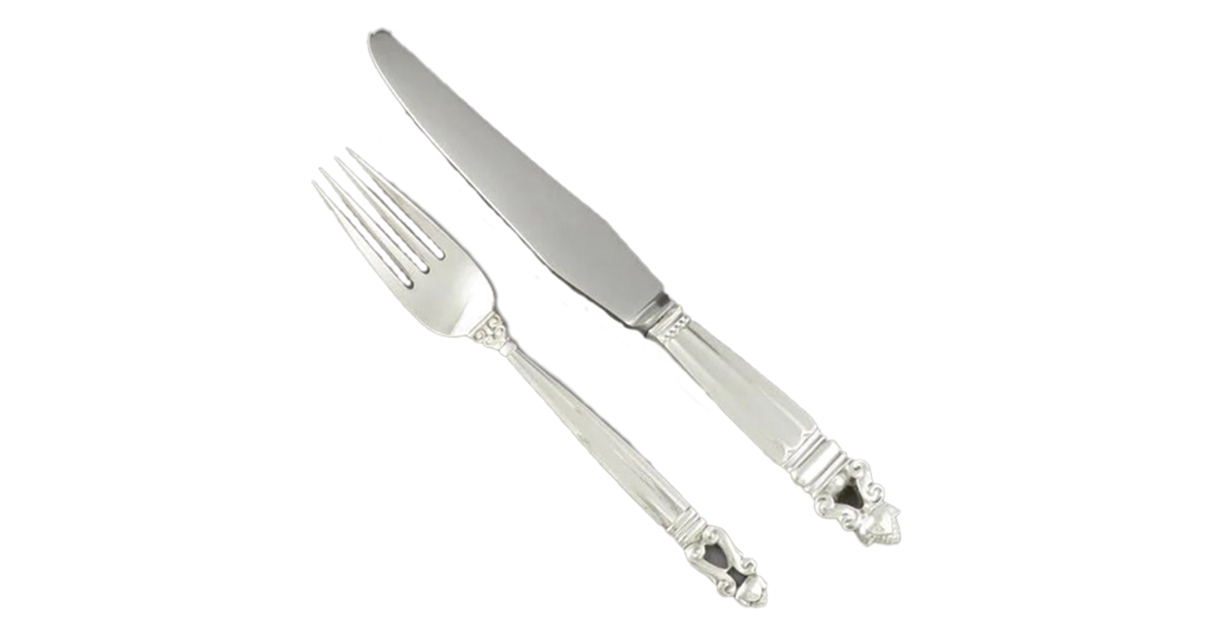
The ‘Acorn’ pattern is a classic Jensen design.
The ‘Acorn’ pattern is, without question, the most famous and best-selling of the Georg Jensen silver flatware designs. Designed by Johan Rodhe in 1915, the ‘Acorn’ pattern was first exhibited at the World’s Fair in San Francisco, and quickly became popular.
The simple design echoes elements of Jensen’s characteristic ebb and flow design, with the acorn motifs emphasising the shape of the piece. Classic and timeless, the design remains in Jensen’s portfolio even today. Whilst the range once comprised 220 pieces, it has now been reduced to 75. However, the Acorn flatware still maintains the air of traditional luxury with which it has long been associated.
Pyramid Pattern
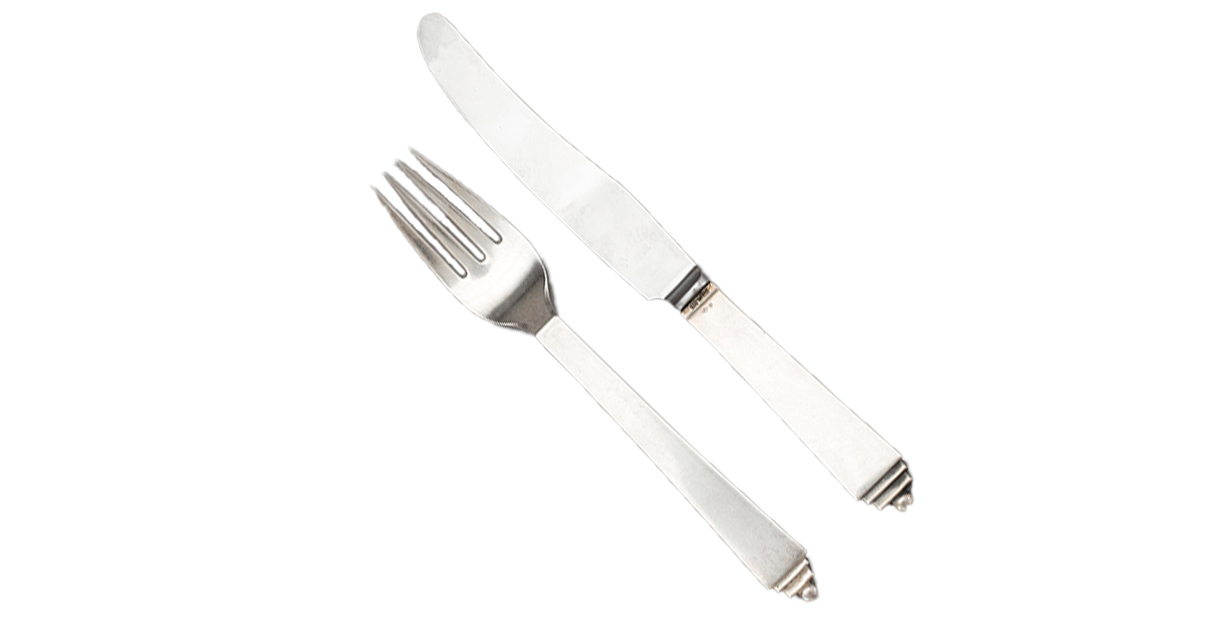
The ‘Pyramid’ pattern echoes Art Deco influences.
The ‘Pyramid’ pattern of silverware was designed by Harald Nielsen, Georg Jensen’s brother-in-law, in 1927. Having begun his apprenticeship in 1909, during the Art Nouveau movement, Nielsen began experimenting with the geometric shapes of Art Deco.
With the discovery of the tomb of the Egyptian Pharaoh Tutankhamun in 1922 came a fascination with Egyptology to the West. The ‘Pyramid’ design brings together the elements of Egyptology and Art Deco to create a stylised and timeless flatware design.
Blossom Pattern
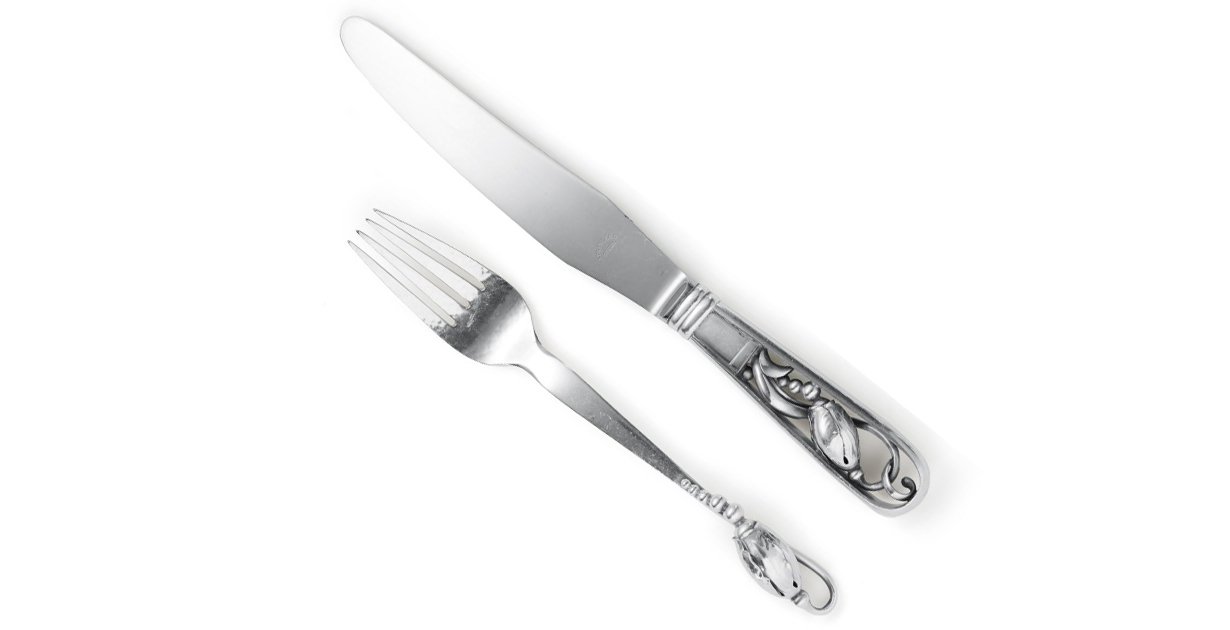
The Blossom flatware was designed by Georg Jensen, and shows his love of mother nature.
Georg Jensen himself designed the famous ‘Blossom’ pattern flatware. Having spent his formative years practicing the art of silversmithy amid the Art Nouveau movement, Jensen was passionate about marrying form and function with the beauty of nature. This ethos led to the design of the ‘Blossom’ pattern.
Jensen designed the ‘Blossom’ pattern in 1905 for a teapot. However, it was not until 1919 that the ‘Blossom’ flatware was created. The intricate design depicts a flower bud on the verge of blooming that snakes its way up the stem of the piece (fork, spoon, knife, etc…) The ‘Blossom’ design is indicative of Georg Jensen’s fascination with mother nature.
Cactus Pattern
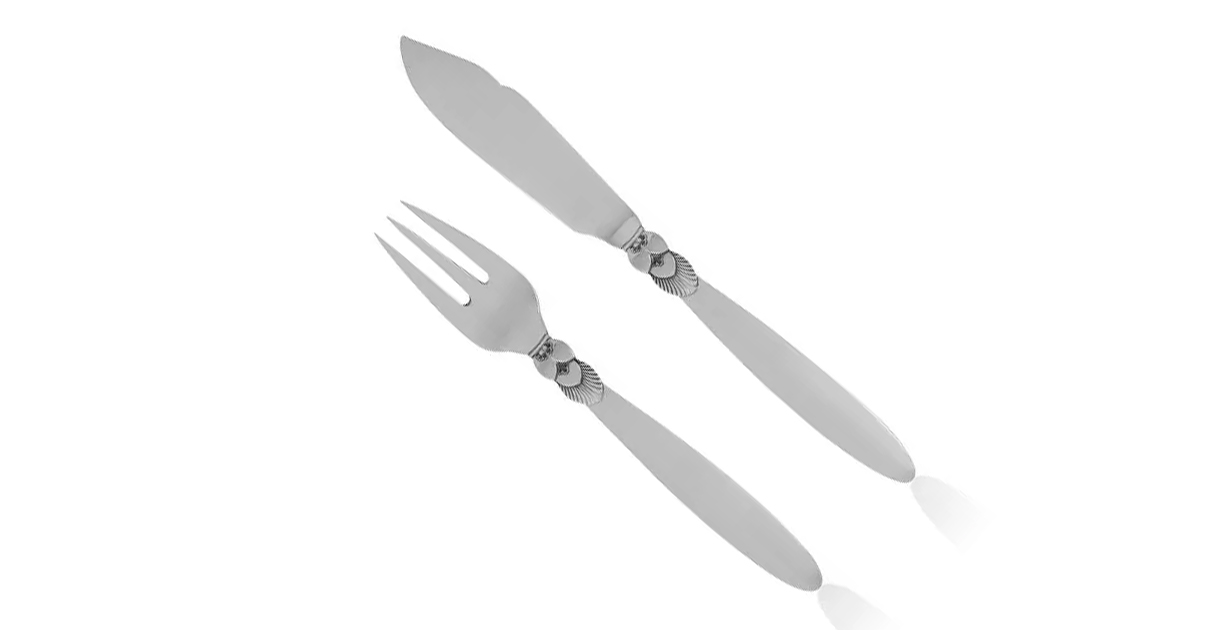
The ‘Cactus’ pattern was designed by talented chaser, Gundorph Albertus.
The ‘Cactus’ pattern was designed by Gundorph Albertus, who trained as a chaser in 1905 and finished his silversmith training in 1909. By 1911 he had trained further at École des Arts Décoratifs in Paris and returned to Denmark to work as a chaser for Georg Jensen. By 1915, he had also trained as a sculptor.
In 1930, Albertus designed the ‘Cactus’ pattern, incorporating elements of Art Deco design with the classic elegance of Jensen’s pieces. Having trained as a chaser, Gundorph Albertus was used to working meticulously with silver and learning its habits and limits, allowing him to impart impressive detail to his designs.
Georg Jensen Silver Designs by Johan Rohde
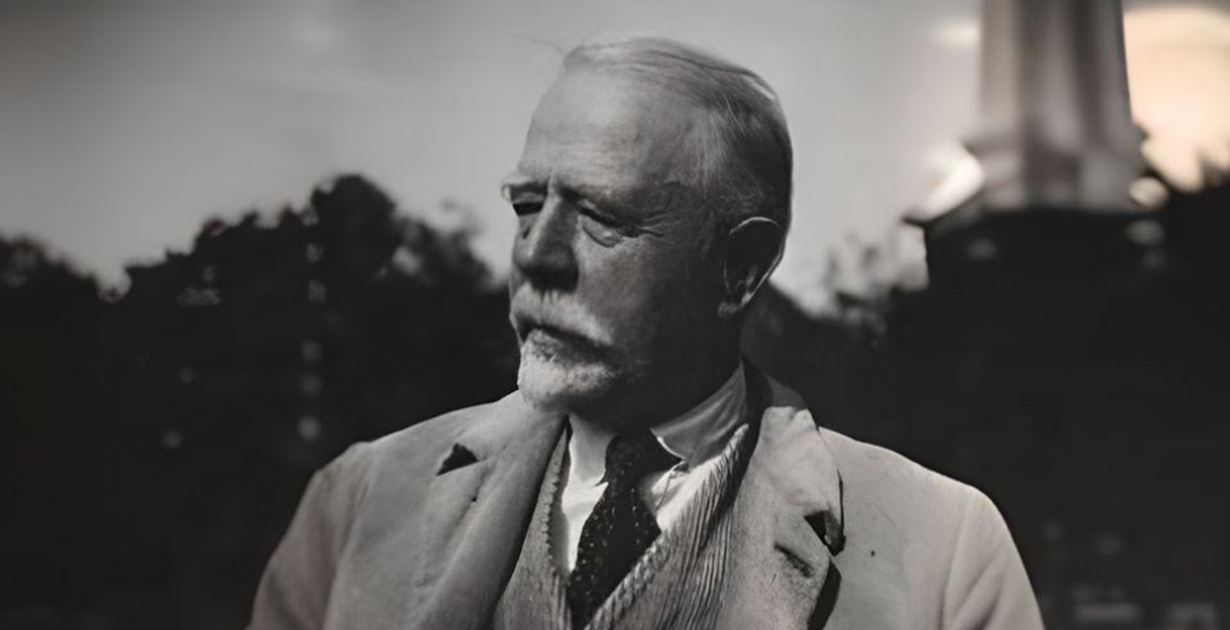
Johan Rohde was Jensen’s first collaborator.
Johan Rohde’s collaboration with Georg Jensen is, arguably, one of the most important in Jensen’s history.
Jensen and Rohde knew each other well before their first collaboration. Having been friends since college, Rohde had previously encouraged Jensen to exhibit his work at the Danish Royal Academy of Fine Arts in 1897.
In 1904, Rohde commissioned Jensen to bring to life designs he had drawn of everyday objects for his personal use. Georg Jensen, impressed by Johan Rodhe’s work, employed the former as a designer. Eventually, Jensen secured a permanent contract with Rodhe in 1913.
Johan Rodhe’s ‘Acorn’ design (dating back to 1915) produced what is considered the most famous flatware in Jensen’s portfolio. Rodhe’s designs are revered and highly sought after, with objects such as fish dishes commanding five-figure sums, and silver services selling for thousands.
Georg Jensen Silver Designs by Harald Nielsen
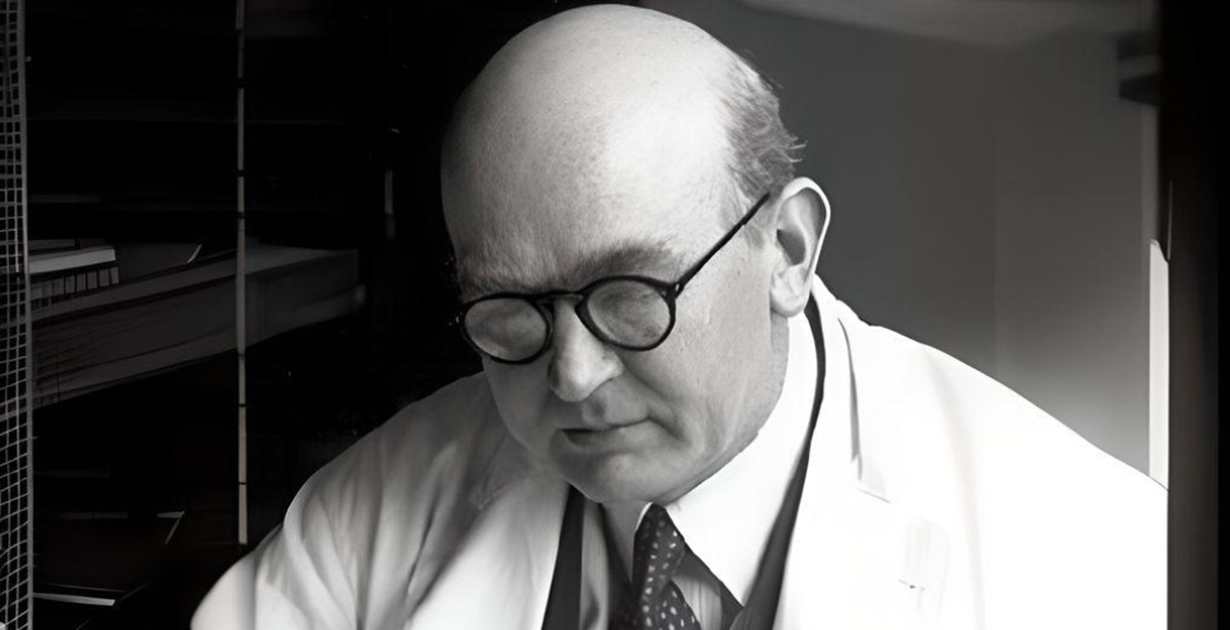
Harald Nielsen was Georg Jensen’s brother-in-law and close collaborator.
The connection between Harald Nielsen and Georg Jensen reaches back further than their first collaboration. Nielsen was the younger brother of Georg Jensen’s third wife, Laura Nielsen and, through his family connections, he was drawn to the profession of silversmithy. He began as an intern for his brother-in-law in 1909.
Nielsen’s style was similar to that of Johan Rodhe’s, and he had a particular eye for detail. Nielsen was uniquely gifted in turning Jensen and Rodhe’s rough sketches into precise designs.
One of Nielsen’s most revered designs is the ‘Pyramid’ flatware. Dating back to 1927, the design is indicative of the Art Deco period whilst remaining true to the classic streamlined style of Georg Jensen silver flatware.
Nielsen remains one of Jensen’s most famous collaborators, with his pieces often fetching tens of thousands of pounds at auction.
Sell Your Georg Jensen Silver
If you are looking to sell your Georg Jensen silver, Mark Littler Ltd can help you achieve the best price.
With expert valuations and quick and easy sales routes, you can be sure that your silver is in the best hands.
Get in touch to find out more.